
When it comes to dryer venting, not all hoses are created equal. In fact, using the wrong duct behind your dryer can lead to:
- Lint buildup
- Long dry times
- Fire hazards
- Code violations
One of the most important—but most ignored—parts of your setup is the dryer transition duct, the connector between your dryer and the wall vent. Here’s how to choose the safest, most durable, and most efficient option.
✅ Best Dryer Transition Ducts to Use
1. DryerFlex® Transition Hose (Top Recommendation)
DryerFlex is the best all-around option for most homes:
Made from multiple layers of tightly wound aluminum over steel wire
Flexible like a hose, but crush-resistant like rigid metal
Smooth interior allows maximum airflow and minimal lint buildup
UL-2158A Listed and code-compliant
Easier to install in tight spaces
🔥 DryerFlex offers the best balance of safety, durability, and ease of use — it’s what many pros (including us) prefer when rigid metal isn’t feasible behind the dryer.
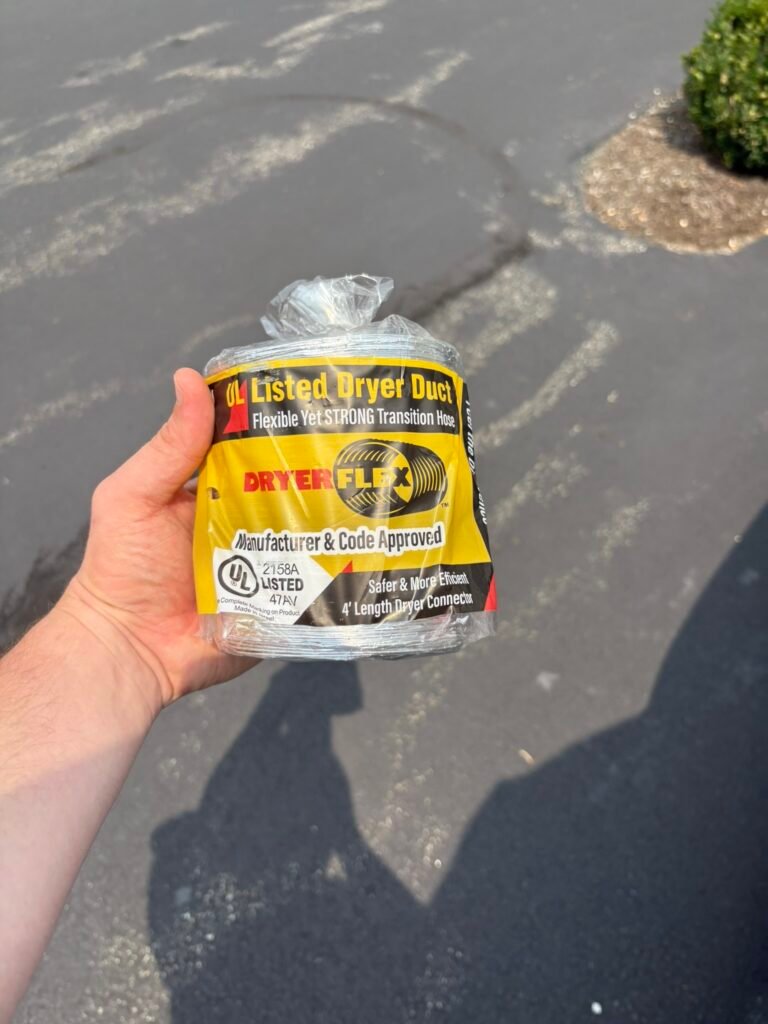
2. Rigid Metal Duct (Aluminum or Galvanized Steel)
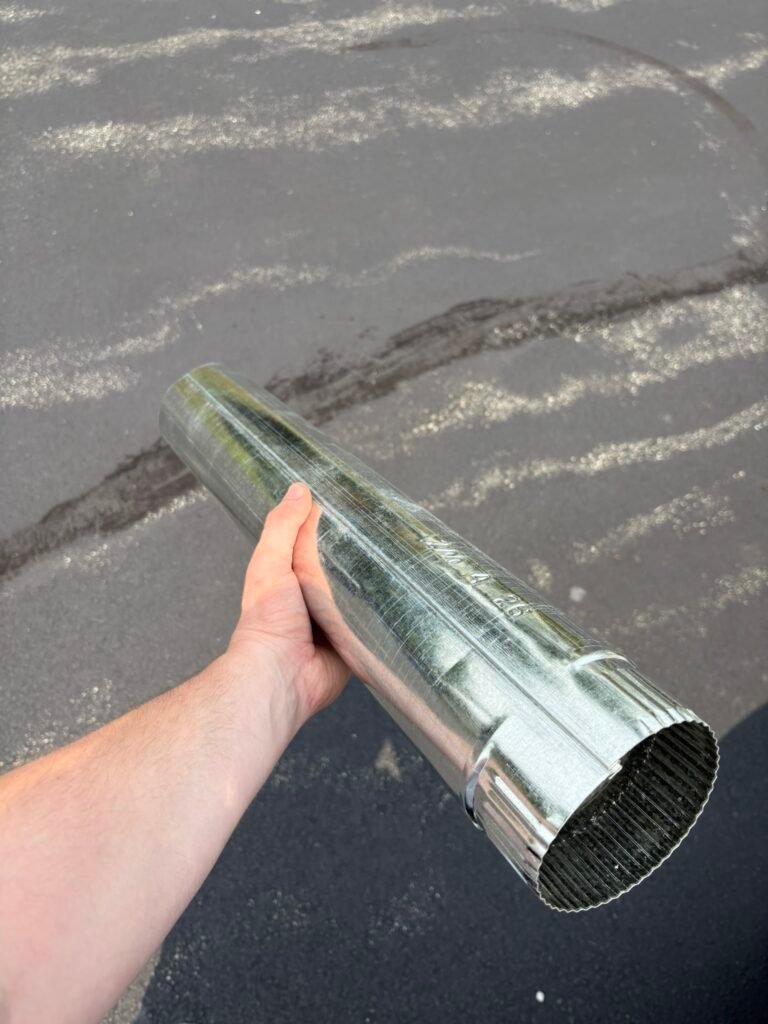
Rigid metal ducting is the gold standard for dryer venting, especially when airflow and long-term safety are your top priorities.
Completely non-combustible
Perfectly smooth interior maximizes airflow and reduces lint buildup
Extremely durable — won’t crush or tear
Fully code-compliant for in-wall, attic, or long vent runs
✅ Rigid metal ducting is the best option if space allows behind the dryer. It provides unmatched airflow performance and longevity.
The only downside: It’s not flexible, so it may require elbows, and in tight spaces, it can make accessing the back of the dryer more difficult after installation..
3. Semi-Rigid Aluminum Duct
Fire-resistant and code-compliant
More flexible than rigid metal, but still prone to crimping or crushing
Interior isn’t as smooth as rigid, so more likely to collect lint over time
Can degrade if bent repeatedly or exposed to moisture
👍 Semi-rigid is a decent option, but it’s more of a compromise between flexibility and safety. Rigid metal is better long-term, and DryerFlex outperforms it in tight spaces.
❌ Dryer Ducts You Should Avoid
1. Plastic (White or Clear Vinyl)
Highly flammable
Easily crushed and traps lint
Not legal for dryer venting in most places
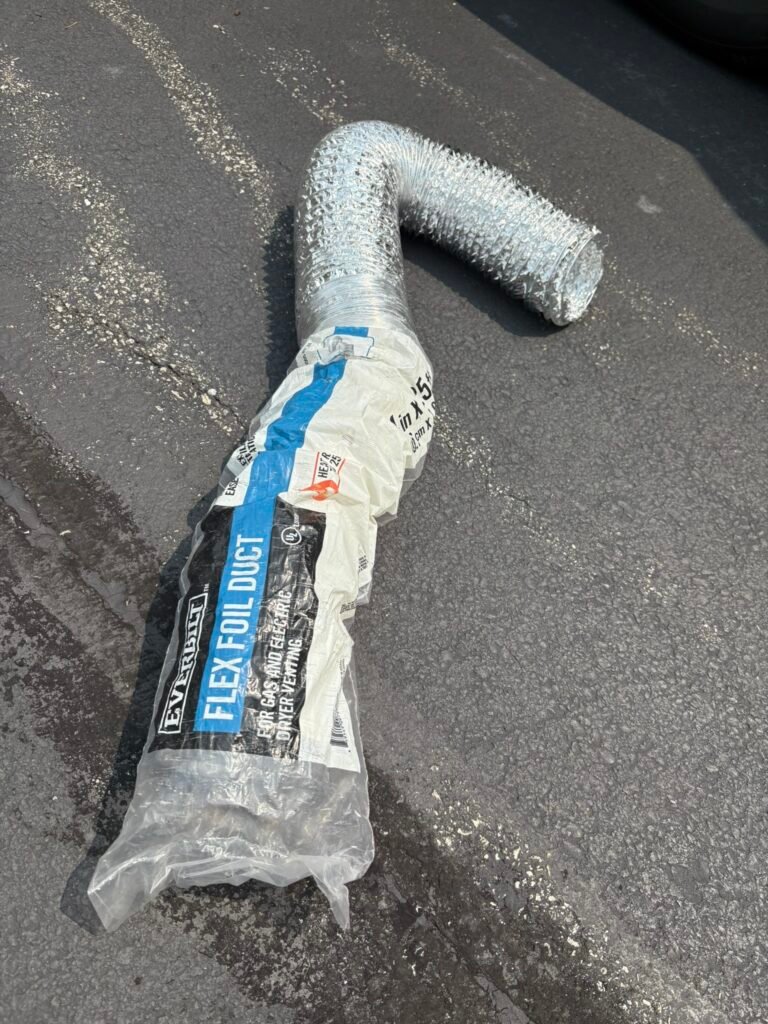
2. Flexible Foil Duct
Allowed only in short runs
Rips easily, crushes under pressure
Traps lint due to its ribbed surface
Often the weakest link in otherwise good dryer setups
🧰 When Should You Replace Your Dryer Duct?
Replace your transition duct if:
It’s made of foil or plastic
It’s damaged, crushed, or kinked
You’re noticing hot laundry, slow dry times, or a burning smell
You haven’t had it inspected in over a year
👷 Need Help with Installation or Upgrading?
At The Lint Guys, we help homeowners install the safest and most efficient dryer vent setups, using:
DryerFlex® transition hoses
Rigid metal ductwork where possible
Code-compliant materials and airflow optimization
📍 Serving homeowners in Morris county, NJ
📅 Not sure if your dryer duct is safe? Schedule an inspection today — we’re here to help with cleaning, repairs, or upgrades!
Don’t take chances with your dryer vent. Make the smart choice with safe, durable, high-performance ducting.
Dryer transition duct questions
Is semi-rigid dryer duct better than flexible duct?
Semi-rigid aluminum duct is fire resistant and code compliant, and it bends more easily than rigid metal. It can still crimp or crush, its interior collects more lint over time, and it can degrade if it is bent repeatedly or exposed to moisture. In this article we list semi-rigid as a decent compromise between flexibility and safety, and flexible foil duct as one to avoid.
Is flexible foil dryer duct allowed?
Only on short runs. Foil duct rips easily, crushes under pressure and traps lint in its ribbed surface, and it is often the weakest link in an otherwise good dryer setup. If your transition duct is made of foil or plastic, replace it.
Can I use aluminum or galvanized steel duct for a dryer?
Yes. Rigid metal duct, in aluminum or galvanized steel, is the gold standard for dryer venting when space allows. It is completely non-combustible and smooth inside, it will not crush or tear, and it is fully code compliant for in-wall, attic or long vent runs. The only downside is that it does not flex, so it may need elbows.
Is DryerFlex UL 2158A listed?
Yes. DryerFlex is UL 2158A listed and meets building code requirements. It is made from multiple layers of tightly wound aluminum over steel wire, and its smooth interior allows maximum airflow with minimal lint buildup.
What is the best type of dryer vent hose?
For most homes our top recommendation is DryerFlex. It is flexible like a hose and crush-resistant like rigid metal, and it is easier to install in tight spaces. Rigid metal duct is the best option if space allows behind the dryer. DryerFlex installation is $75, and the details are on our DryerFlex transition hose page.
Need help with this at your house? See our DryerFlex transition hose installation.
More dryer vent guides: dryer vent questions and answers and dryer vent advice from The Lint Guys.
Last updated
Get Started Today
Dryer overdue for a cleaning? Let’s get it handled.
Honest quotes agreed before any work starts · Serving all of Morris County, NJ
8:00 AM to 8:00 PM, seven days a week